
← All projectsPROJECT SHOWCASE
Psychology Center of Hawaii
A neuropsychological-evaluation website organized around everyday questions and clear inquiry routes.
Website analysis
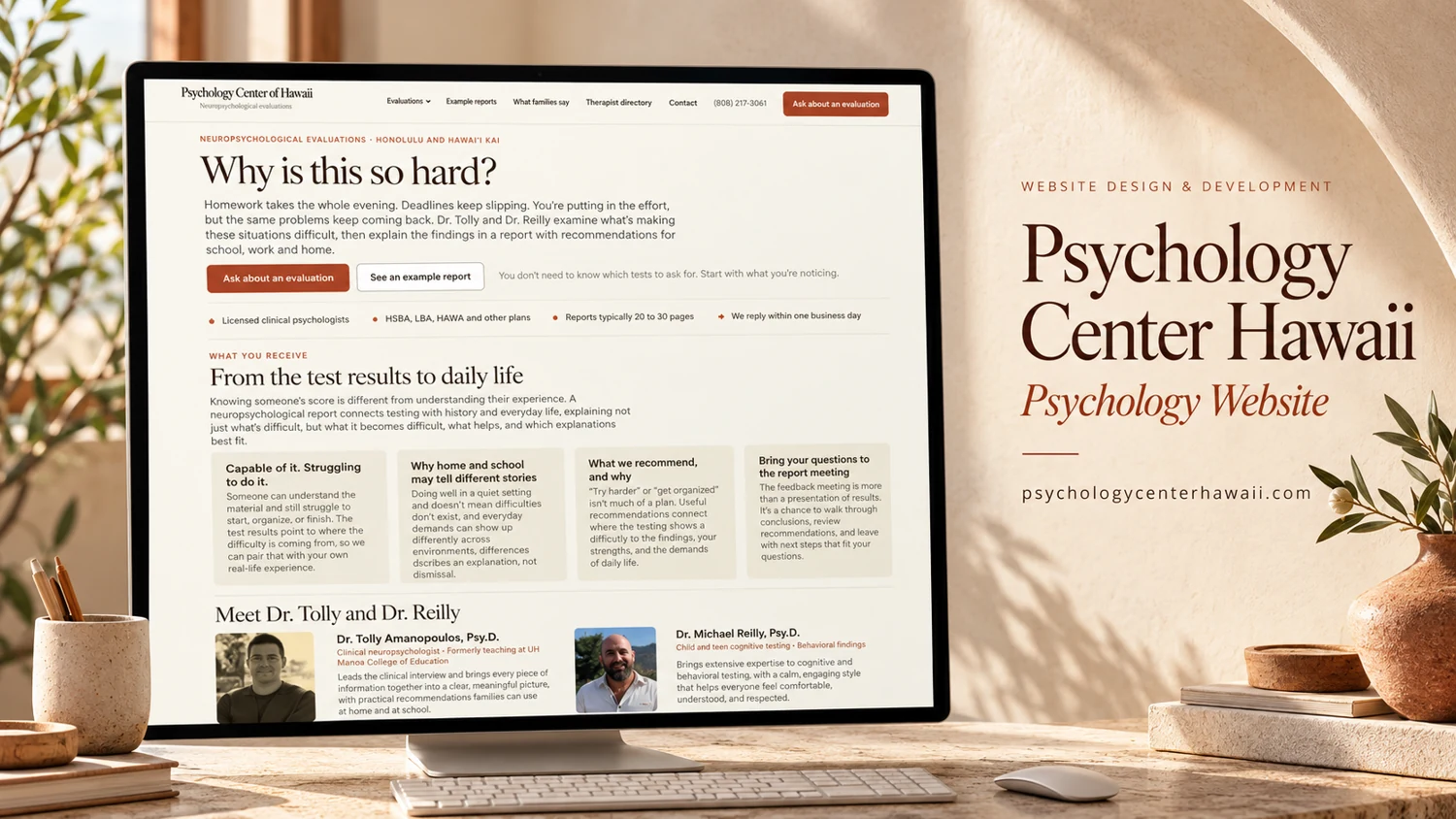
The current homepage presents neuropsychological evaluations in Honolulu and Hawaii Kai. It links to evaluation topics, example reports, a therapist directory, and contact information. The introduction discusses everyday difficulties and offers inquiry and sample-report routes. Profiles introduce Dr. Tolly Amaxopoulos and Dr. Michael Reilly.
Information and visitor journey
The approach begins with concerns a visitor may recognize rather than requiring a technical test name. The sample-report link gives people a concrete way to understand the deliverable. Practitioner profiles and a section explaining findings provide additional context for an inquiry.
Design rationale
A healthcare website should keep inquiry forms focused and clearly distinguish administrative contact from clinical assessment. The visible page asks callers or texters to omit sensitive health details. This review evaluates communication and does not validate diagnoses, clinical outcomes, insurance eligibility, or professional credentials.
Presentation and audience
The supplied reference uses an off-white background, serif headings, rust-colored actions, and compact explanatory cards. Rather than relying on a dramatic medical image, the first screen uses readable text to describe a problem and what an evaluation can provide. Practitioner photographs appear below that explanation, connecting the service description with the people named on the page.
The paired actions offer different levels of commitment: ask about an evaluation or inspect an example report. This is a useful distinction for someone still trying to understand what the process means. Topic links and age-based evaluation pages can then help a visitor locate relevant information without self-selecting a diagnosis. The explanatory cards also make room for nuance, including differences between everyday experience and testing conditions, which supports a careful and informative presentation.
Website analysis based on the observed page or supplied reference; no client brief, authorship, or measured outcomes are asserted.